Commonwealth Closing the Gap report release
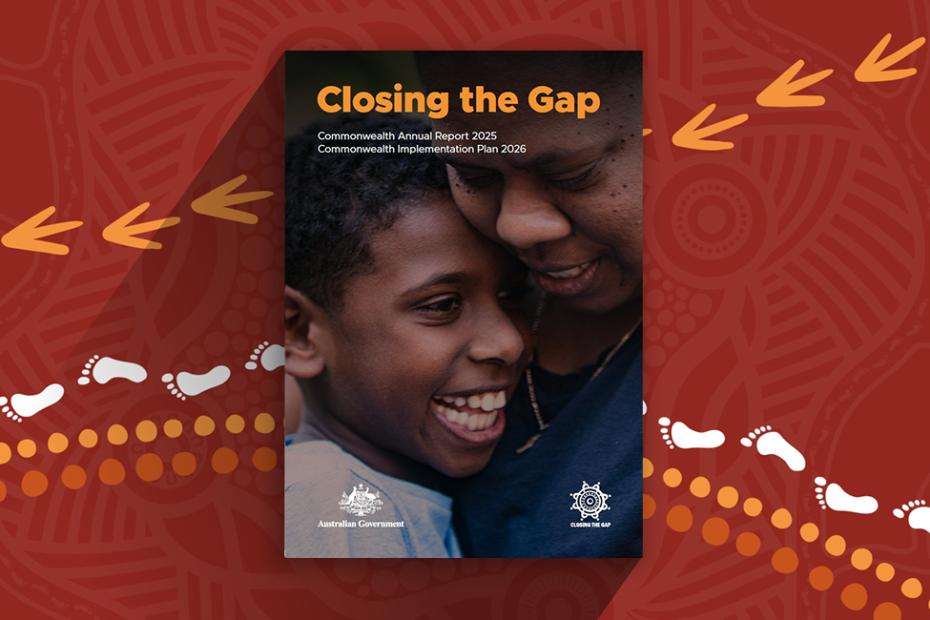
The Australian Government has released the Closing the Gap 2025 Annual Report and 2026 Implementation Plan (AR‑IP).
The Report reinforces that Closing the Gap is whole‑of‑Commonwealth business, with agencies working alongside First Nations partners, the Coalition of Peaks, and all levels of government to improve outcomes for First Nations people.
2025 Annual Report
The 2025 Report shows meaningful progress, demonstrating practical delivery in communities and highlighting how Commonwealth actions are translating into real, local impact for First Nations people.
Key achievements include:
- Making essential goods more affordable: Through the Low‑Cost Essentials Subsidy Scheme, 117 remote stores offered 30 essential food items at lower prices.
- Creating real jobs in remote communities: The Remote Jobs and Economic Development (RJED) Program supported more than 1,450 real jobs, and is already more than halfway to its target of 3,000 jobs by 2027.
- Improving access to culturally safe healthcare: Upgrades to essential health facilities and expanded community‑led care services, including Birthing on Country programs.
- Building more housing: More than 300 new homes were built in remote Northern Territory communities since the since the program launch on 1 July 2024, improving access to safe, secure housing.
- Strengthening environmental and cultural stewardship: The Indigenous Rangers Program continues to grow, with more than 1,000 new Ranger jobs created.
- Delivering better access to education and training: Ten new Regional University Study Hubs opened, supporting improved access to tertiary pathways for First Nations learners.
2026 Implementation Plan
The 2026 Implementation Plan sets out the Commonwealth’s forward agenda, building on what works to deliver meaningful change and greater self‑determination for First Nations peoples. It continues the shift towards community‑led, partnership‑based approaches, consistent with the Priority Reforms.
Key priorities for 2026 include:
- Expanding the RJED Program to create 3,000 additional jobs across remote communities.
- Extending the Low‑Cost Essentials Subsidy Scheme to 75 more stores.
- Improving family safety through increased investment in culturally safe crisis support services.
- Continuing delivery of new housing and infrastructure through the Housing Australia Future Fund and the 10‑year NT housing investment.
- Doubling the Indigenous Rangers Program workforce to 3,800 Rangers by 2030.
- Providing free Community Wi‑Fi in up to 50 remote communities.
- Supporting Prescribed Bodies Corporate to build capacity and accelerate economic opportunities.
- Strengthening accommodation services through investment in Aboriginal Hostels Ltd.
- Implementing the Our Ways, Strong Ways, Our Voices Plan to address family, domestic and sexual violence.
- Continuing Birthing on Country services, supporting more than 1,100 families each year; completing up to eight renal dialysis units; and targeted action on congenital syphilis.
- Delivering a 3‑day guarantee ensuring childcare access — providing 100 hours of subsidised early childhood education and care for CCS‑eligible families caring for a First Nations child.
The Report also highlights the Government’s continued commitment to working in partnership with First Nations people and organisations, ensuring policies and programs are community‑led to deliver better outcomes and long‑term success.
Read the report at Closing the Gap | NIAA
Related News