
Affordable essentials supporting good health in remote communities
Low-cost Essentials Subsidy Scheme
Remote stores deliver crucial supplies to remote communities across Australia, and now a new Federal Government Scheme is ensuring that essential items are available at reasonable prices.
Charlene Rocky, who lives in the community of Lockhart River in Cape York, is proud to work at the remote store the “Freddie Clarence Moses Supermarket” operated by Community Enterprise Queensland. The store is named after her grandfather and distinguished leader of Lockhart River Community, Mr Freddie Clarence Moses.
Mr Moses advocated for the opening of the store and managed it for many years, providing a vital service to the local community.
“He was the manager before... one of the Elders who fought” to get a store in the remote community of Lockhart,”
Ms Rocky does her own fortnightly shopping at the store and appreciates the cost of some items has been brought down.
“It’s actually great. Like, you know, like we have like discounts on some, some of the items here,”
“Some of the items here that we sell here are a bit too expensive,” she said.
Like other remote stores across Australia, addressing the high cost of essential items compared to prices in urban areas has long been a challenge.
According to current Store Manager Soum Saha, this is due in part to the lower buying power of smaller stores compared to the big supermarkets and the high costs of operating stores in very remote locations.
With the store joining the Australian Government’s Low-Cost Essentials Subsidy Scheme, some of that pressure has been eased.
The Scheme brings 30 essential items to remote communities at reduced and affordable prices. The expected savings for remote consumers is up to 50%. It means lower priced everyday items to help families save money and have greater access to healthy food. Over 100 remote stores have now joined the Scheme across Australia.
Since the Lockhart River store joined the Low-Cost Essentials Subsidy Scheme, they have noticed items like canned vegetables, rice, and even nappies are now more affordable, and that makes a difference to community, says Soum Saha.
“For the remote communities, it’s actually great,” he said.
“If we can provide a bit of relief on the food, that’s a big difference to make,” he said.
“People will save a bit of money, this is helping them. I can see people buying more,” said Mr Saha.
Remote stores provider in the region, Community Enterprise Queensland, expects changes to shopping habits from the new initiative.
“We are empowering people to make better choices by making healthier food more accessible, and we are already seeing the buying patterns of our customers change,” said CEQ’s Chief Executive Michael Dykes.
A new nutrition workforce, team members equipped to support families make healthy choices in stores is being launched, to help drive long-term changes to habits and improvements to health and wellbeing outcomes.
The Low-Cost Essentials Subsidy Scheme is a part of the Government’s broader National Strategy for Food Security in Remote Aboriginal and Torres Strait Islander Communities. It is administered by the National Indigenous Australians Agency and delivered by Outback Stores, a not-for-profit Commonwealth company.
Store management companies, including Outback Stores (OBS), Arnhem Land Progress Aboriginal Corporation (ALPA) and Community Enterprise Queensland (CEQ), along with many independent remote stores, are key to the success of the Scheme across the nation. ALPA is also leading the development of a nutrition workforce in stores to support healthy food choices in communities.
Supporting remote food security directly contributes to Closing the Gap Outcomes: 1 Everyone enjoys long and health lives, 2 Children are born healthy and strong, 4 Children thrive in their early years, and 14 People enjoy high levels of social and emotional wellbeing.
Find out more about the Food Security program here: Food Security | NIAA
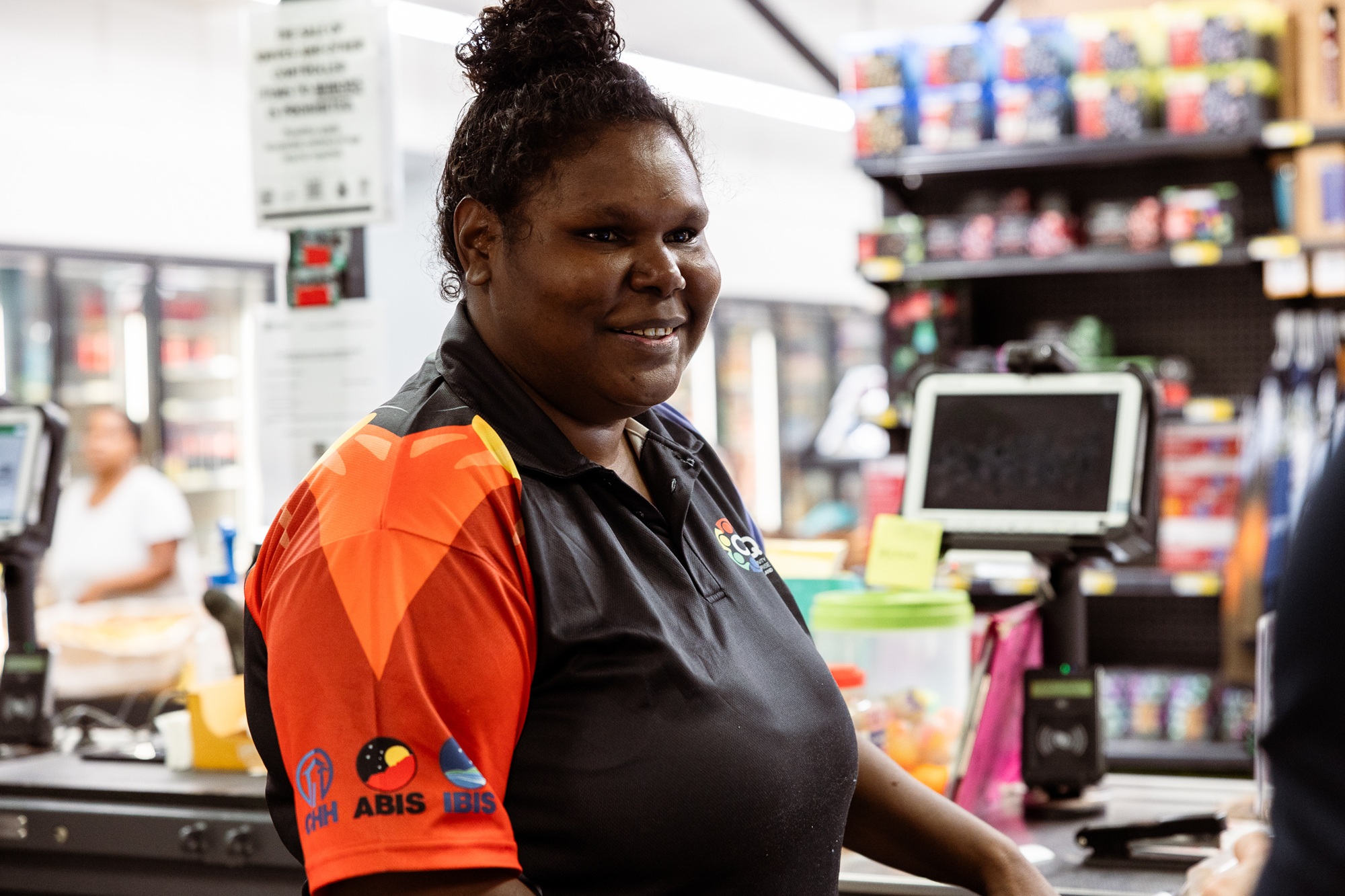
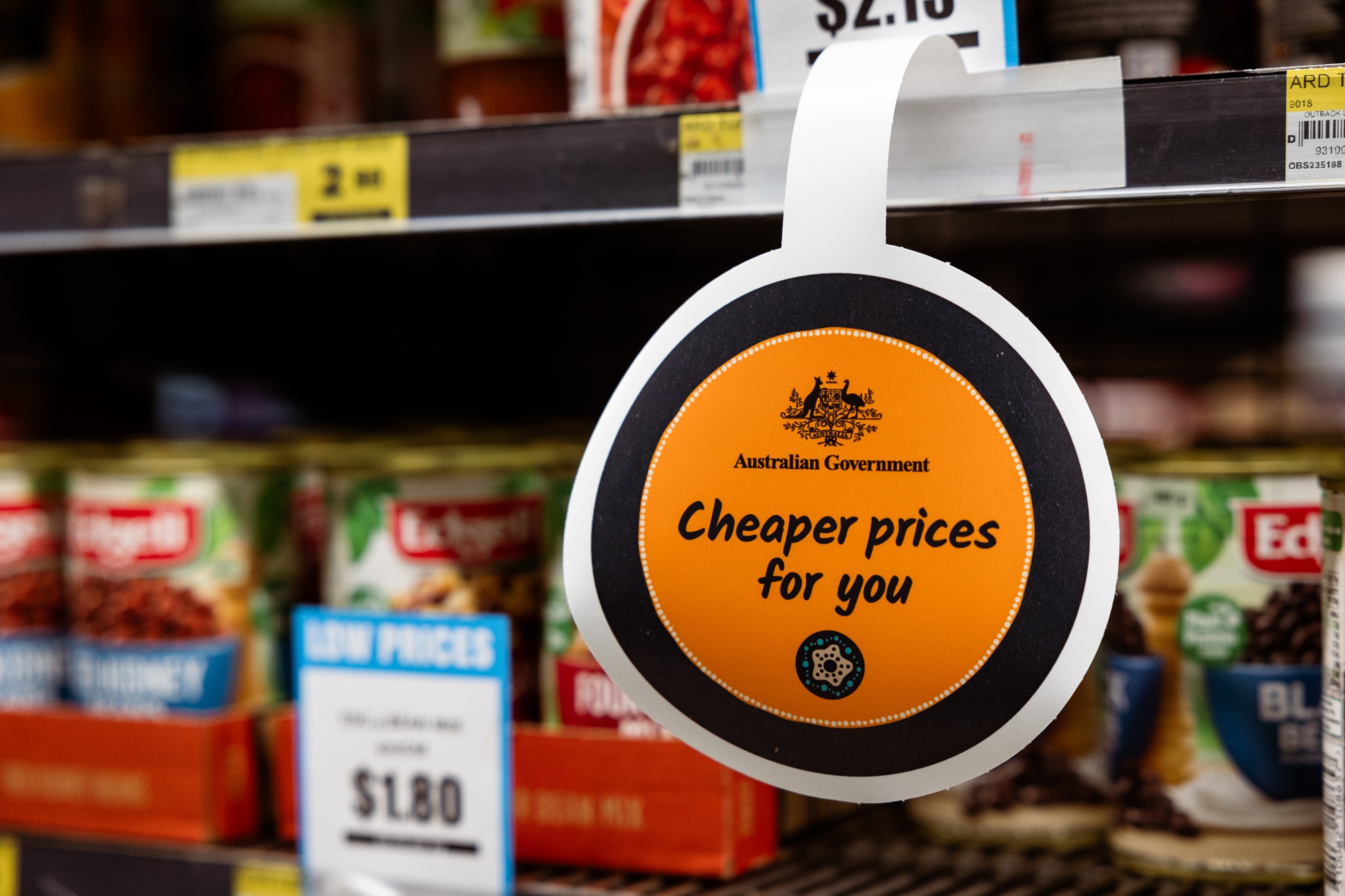
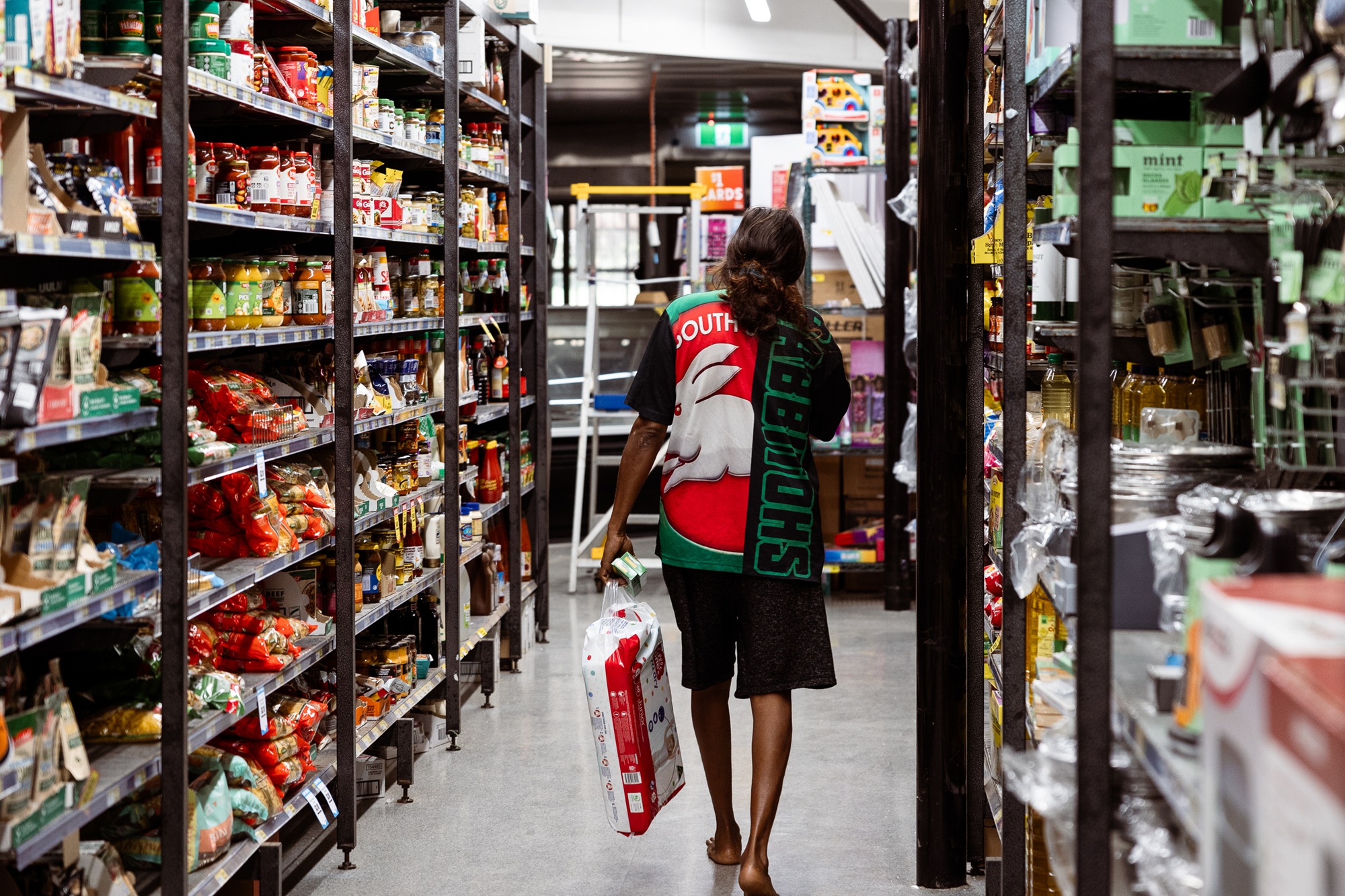
Photos: Charlene Rocky works at Freddie Clarence Moses Supermarket, Lockhart River. Low-cost essentials are now available at many remote stores.