
EEAI case study: Ngala Community Services – Insights from Kay Mongoo (Nanna Kay)
Carnarvon, Western Australia
Community leaders play a critical role in supporting young First Nations students in remote communities.
Overview
Community led and culturally appropriate approaches are essential for providing learning support and pathways that lead to better education outcomes for First Nations young people. The Education Engagement and Attainment Initiatives (EEAI) has been developed with community leadership and inclusion at the centre. The EEAI is a Australian Government program that provides funding to local organisations in locations across Australia, to support First Nations young people to improve their engagement and learning outcomes.
Ngala’s and Kay’s approach
Community leaders are central to improving school engagement for young First Nations students in remote communities. Kay Mongoo has been supporting First Nations young people in Carnarvon to engage with school, through building trust and supporting culturally grounded engagement and community-designed approaches.
Kay’s work through Ngala’s Carnarvon Education & Engagement Program (CEEP) is an example of the positive outcomes that are achieved when place-based, community-led approaches are used and local leaders help First Nations young people to stay connected to their learning.
Kay works with the Carnarvon Community College to provide:
- Classroom support
- Presence at school events
- Joint planning for engagement strategies
School staff benefit from her cultural knowledge and guidance, and students benefit from seeing respected community members inside the school environment. This approach supports better school attendance, stronger relationships, and reduces barriers between home and school.
Cultural authority, trust and relational engagement
Community leaders hold deep cultural authority and trust and when working with mainstream schools, students experience better educational outcomes. Kay Mongoo’s relationships are so strong that the young people she works with call her ‘Nanna Kay’, reflecting the cultural safety, trust and belonging she creates.
Students and families seek out leaders they know will listen without judgement and who can work in culturally appropriate and relational ways.
Kay Mongoo shares, “Patience and understanding are essential. Trust drives engagement and emotional development.”
In remote communities, where school systems may be mistrusted or feel culturally unsafe, leaders like Kay act as bridges, supporting families, guiding schools, and building the relational foundations necessary for learning.
Reinforcing the value of education
Community leaders like Kay help students to build a positive relationship with education by talking about its importance in ways First Nations young people and their families can relate to.
“Getting a good education is the only thing that’s going to help you in the future. You can achieve anything you want in life, but it’s very important to get that education first.” shares Kay.
Kay’s relational approach is important for First Nations young people who are facing complex challenges, including disengagement from schooling, family pressures, cultural responsibilities and exposure to youth crime or substance use.
Culturally relevant learning grounded in Country
Kay’s work shows how culturally grounded approaches improve engagement. CEEP integrates:
- Bush Classrooms
- On Country learning
- Outdoor activities, including fishing, camping, and horse programs
These practices strengthen identity, connection and wellbeing, making learning feel relevant and accessible.
This approach is supporting First Nations young people to feel more confident, supported and interested in education because their learning reflects their culture, their landscape, and their community’s ways of learning.
Supporting family wellbeing and stability
Community leaders understand the broader social environment impacting children’s lives. Kay supports families with challenges including:
- Impacts of drug and alcohol use
- Health issues
- Social media harms (cyberbullying, conflict)
She connects families with services, encourages follow through, and helps address underlying issues that keep children out of school.
With barriers to school engagement being different for each student and family, and some facing significant challenges, this holistic approach to support students and their families is essential. Leaders like Kay play a vital role as advocates, mentors and connectors.
Youth Voice, Co-design and Empowerment
Kay ensures that the First Nations young people she works with are involved in the planning of programs, and that they reflect what young people say they need. Young people feel respected, heard and part of the solution—leading to greater ownership and participation.
CEEP includes:
- Youth input into program design
- Activities shaped around local interests
- Support for girls’ groups, boxing programs, and culturally meaningful engagement
Conclusion
Ngala’s CEEP and Kay’s approach is achieving positive outcomes for the First Nations young people engaged. Outcomes include:
- Increased youth participation in programs
- Stronger school engagement
- Improved collaboration between schools, families and services
These outcomes reinforce that community-led, culturally grounded approaches are essential.
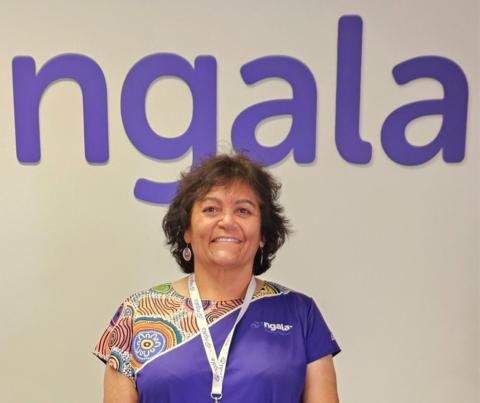
Photo courtesy of Ngala Community Services. “Nanna” Kay Mongoo.