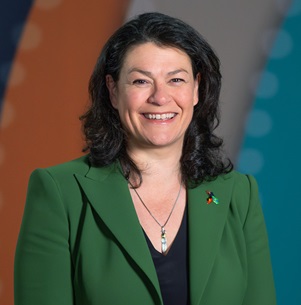
Rachael Jackson
Chief Operating Officer
RAP Champion
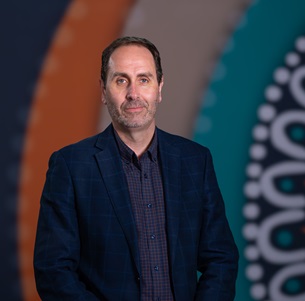
Craig Hendry
South Australia Regional Manager
RAP Champion
Reconciliation is strongest when it is shaped by many voices, informed by lived experience, and embedded in how an organisation works every day.
We are proud to support the NIAA’s Stretch RAP 2026–2029, and to acknowledge the significant collective effort that has gone into its development. This RAP reflects the depth of commitment across the Agency — from staff in offices where the Agency is located, from Aboriginal and Torres Strait Islander staff and allies, and from those who gave their time, insight and leadership to help shape our next chapter.
The development of this RAP is grounded in genuine consultation and engagement. Contributions from staff through all-staff workshops, yarning sessions, surveys, priority-setting exercises and RAP Working Group deliberations have helped us move from a broad range of ideas to a focused set of commitments that are ambitious, practical and aligned to the NIAA’s core business. This process was not about generating a long list of actions, but about sharpening our intent — strengthening cultural safety, addressing institutional racism, and embedding system-level change through the Priority Reforms of the National Agreement on Closing the Gap.
We would like to sincerely acknowledge the members of the RAP Working Group and the Aboriginal and Torres Strait Islander Network (ATSIN), whose leadership, challenge and collaboration have been central to this work. The RAP Working Group has been a powerful reflection of the NIAA’s diversity, bringing together perspectives from all Groups and regions to ensure this RAP speaks to how we work in practice, not just in principle.
As we move into implementation, governance of the RAP will transition into the NIAA’s broader Priority Reform Operating Model, with oversight through established committees and the Executive Board. This change reflects the maturity of NIAA’s reconciliation journey — embedding reconciliation as business-as-usual, rather than something delivered in parallel. Importantly, consultation and engagement will continue through forums such as ATSIN, Your Say, all-staff engagement activities and regular communications, ensuring staff voices remain central to how this RAP is delivered and evolved.
This Stretch RAP invites all of us to play a role. Reconciliation is not the work of a single group or plan; it is built through everyday decisions, behaviours and relationships. We encourage all staff to see this RAP as a shared commitment — one that challenges us to lead with integrity, strengthen partnerships, and contribute to meaningful and lasting change.
Thank you to everyone who has helped shape this RAP and who continues to advance reconciliation through their work at the NIAA.