
We lead and coordinate Closing the Gap, fulfil our commitments under the National Agreement, and influence across governments
National Agreement on Closing the Gap

The National Agreement on Closing the Gap (National Agreement) is a genuine partnership between local government, states and territories, the Australian Government and the Coalition of Peaks to work together to improve life outcomes for Aboriginal and Torres Strait Islander people. It is the first and only National Agreement that is targeted on Closing the Gap, and continues to be a priority for the Australian Government.
The NIAA plays a central role in influencing and supporting the implementation of the National Agreement. While the Australian Government is a key signatory, responsibility for delivering the National Agreement’s outcomes is shared across state and territory governments, local councils, and Aboriginal and Torres Strait Islander community partners.
The NIAA works as a steward for the National Agreement on behalf of the Australian Government to foster collaboration, influence reform in mainstream settings, promote accountability, and ensure that all parties uphold their commitments to the Priority Reforms and targets, driving a coordinated national effort toward genuine and lasting change.
Influencing transformation
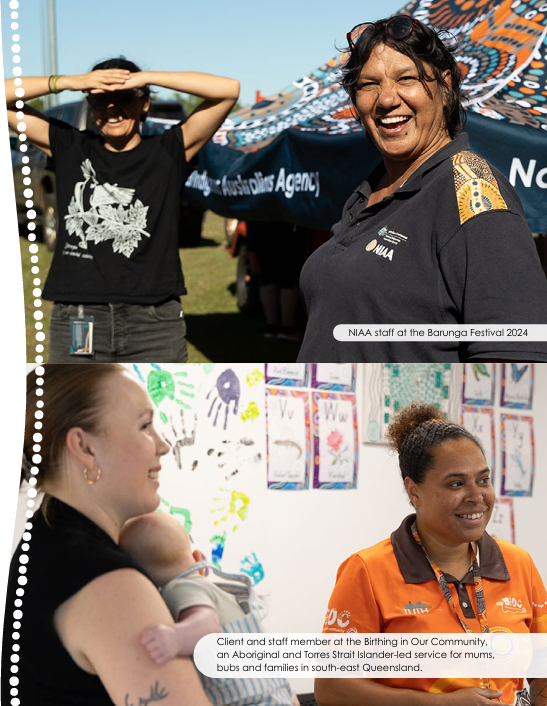
The NIAA supports the implementation of the National Agreement across the Australian Government. We collaborate with departments and agencies to influence the development of policies that are aligned to the Priority Reforms and progress work towards closing the gap between Indigenous and non-Indigenous Australians through mainstream settings. For example, the NIAA plays a lead role in driving the transformation of mainstream government organisations under Priority Reform 3, by advancing priority cross-portfolio initiatives at all levels of government – this includes policy and service delivery and reforms to internal structures and ways of working.
In addition to leveraging national policies and governance arrangements to influence change from the highest levels, NIAA develops the Australian Government's Closing the Gap Annual Report and Implementation Plan. The Annual Report demonstrates what has been achieved and the impact of this work for Aboriginal and Torres Strait Islander peoples. The Implementation Plan presents the priorities for the year to come. Together they provide transparency and accountability to the community.
The 2025 Implementation Plan prioritises food security, remote employment, housing and health and wellbeing. It includes targeted investments aimed at enabling economic self-determination, bettering outcomes for children and families and delivering for people in remote Australia.
Addressing the regressing targets
Unacceptably, 4 targets are regressing – early childhood development is slowing (Target 4), and the numbers of Aboriginal and Torres Strait Islander adults held in incarceration (Target 10), children in out-of-home care (Target 12), and the suicide rate (Target 14) are all increasing. Additionally, youth detention (Target 11) is unchanged from the baseline.
Across 2025–26 the NIAA will continue to influence across the Australian Government and prioritise actions that address these targets.
» Early childhood development: through the Indigenous Advancement Strategy (IAS), the NIAA is investing around $42.5 million in 2025–26 for Aboriginal and Torres Strait Islander peoples children’s early childhood development and enabling activities. Additionally, we provide policy advice across the APS. We support the Early Childhood Care and Development Policy Partnership (ECCDP), led by the Departmnet of Education and SNAICC - National Voice for our Children. ECCDP develops recommendations to improve early childhood outcomes for Aboriginal and Torres Strait Islander children. We also support the Investment Dialogue for Australia’s Children which is a 10-year collaboration to improve the wellbeing of children and young people by working with communities to reduce intergenerational disadvantage.
» Adult incarceration: Working across governments to support implementation of the First Nations Justice Package and support the Justice Policy Partnership to improve justice outcomes for Aboriginal and Torres Strait Islander people. Through the IAS, the NIAA is investing in programs to reduce adult incarceration rates, including adult through-care programs which provide intensive case management to aid transition from prison back into community and reduce re-offending. » Youth detention: Working across governments on youth justice reform and addressing the social drivers of offending behaviours. The NIAA is also investing in initiatives that prevent children and young people interacting with the justice system including a range of youth support and diversion activities. These provide intensive case management to address the drivers of offending behaviour, community safety patrols to ensure children and young people are in safe places, and youth through-care for young people transitioning from detention to community.
» Children in out-of-home care: We are ensuring that the voices of children and young people are embedded in policies and programs designed to address Target 12 by establishing the National Commissioner for Aboriginal and Torres Strait Islander Children and Young People in collaboration with the Department of Social Services. Adjunct Professor Sue-Anne Hunter will commence as the ongoing National Commissioner on 1 September 2025. Through the IAS, the government has allocated $23.2 million over 4 years to deliver culturally-safe, place-based healing programs in 7 target locations for Aboriginal and Torres Strait Islander women and children impacted by family violence or at risk of engaging the child protection system. Safe and Supported: The National Framework for Protecting Australia’s Children (2021–2031) and the Aboriginal and Torres Strait Islander Action Plan 2023–2026 are the key mechanisms for the Commonwealth Government in addressing the overrepresentation of First Nations children in out-of-home care.
» Suicide rates: we are strengthening Aboriginal and Torres Strait Islander peoples social and emotional wellbeing (SEWB), mental health responses and support healing in families and the community. We do this by progressing initiatives such as First Nations Psychology Scholarships, SEWB Assessment Tools, the SEWB Policy Partnership and a flexible funding pool to enable short term, place-based SEWB supports for Aboriginal and Torres Strait Islander peoples, families and communities to manage significant trauma.
Specific actions being taken across the Australian Government in relation to Closing the Gap can be found in the 2025 Implementation Plan.
Strengthening partnerships and the National Agreement
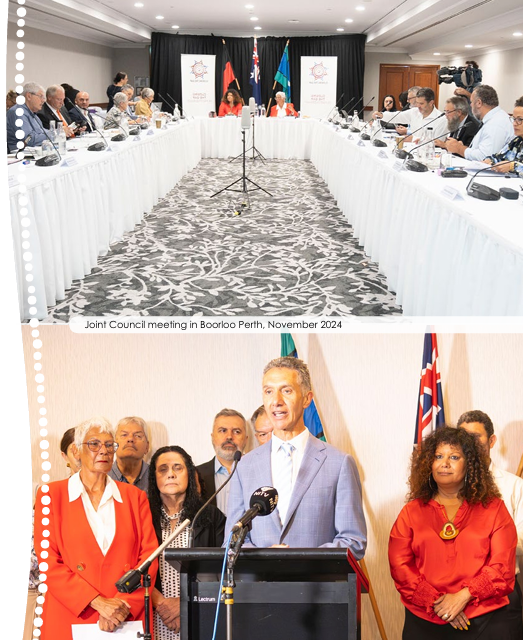
NIAA plays a significant role in the partnerships and actions that fall under the National Agreement. We support the Minister for Indigenous Australians as Co-chair of the Joint Council on Closing the Gap and represent the Australian Government in the Partnership Working Group to drive collective efforts towards the implementation of the National Agreement.
The NIAA also supports the operation of key Closing the Gap infrastructure such as policy partnerships, which ensure collaboration between Aboriginal and Torres Strait Islander peoples and governments can occur in targeted forums. New policy partnerships progressed in 2025 include the Data Policy Partnership, which supports activities that improve data on Priority Reforms and socioeconomic outcomes, as well as targets and indicators under the National Agreement.
Independent oversight is key to the success of the National Agreement and the NIAA continues to support independent reviews of the National Agreement and the implementation of their recommendations. The Productivity Commission Review of the National Agreement (delivered in 2024) and the Independent Aboriginal and Torres Strait Islander-led Review of the National Agreement highlight that greater ambition and effort are required to Close the Gap. The NIAA supports implementation of the recommendations of the Productivity Commission Review and is leading the Australian Government's response to the Independent Review.
Boosting economic empowerment
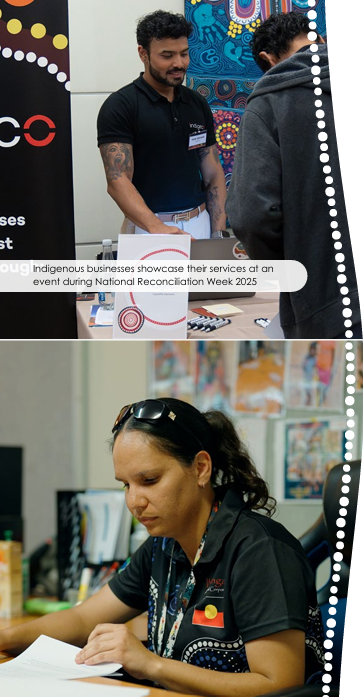
Strengthening the Indigenous Procurement Policy (IPP)
Since the IPP started in 2015, more than 79,000 contracts with a total value of over $12.6 billion have been awarded to over 4,400 Indigenous businesses. The NIAA is progressing the implementation of reforms to the Australian Government’s Indigenous Procurement Policy. The changes aim to increase the ambition of the policy and ensure that the economic benefits of the IPP are genuinely flowing to Aboriginal and Torres Strait Islander peoples as intended. The changes reflect feedback from consultations and recommendations from Parliamentary inquiries. More ambitious Commonwealth and portfolio procurement targets came into effect from 1 July 2025 with changes to IPP eligibility criteria commencing from 1 July 2026. In addition, the NIAA will explore the feasibility of increasing transparency of suppliers’ performance against Indigenous participation targets and work with relevant regulators and support services to identify opportunities to make it easier for Aboriginal and Torres Strait Islander peoples to report "black cladding" that might amount to unlawful conduct.
Supporting the Aboriginal and Torres Strait Islander people's business sector
The NIAA continues to support Indigenous businesses through the Indigenous Business Sector Strategy (IBSS).
The IBSS sets out a 10-year plan (2018–28) for a larger and more diverse Indigenous business sector that builds intergenerational wealth and economic independence by boosting demand for and building supply of Aboriginal and Torres Strait Islander owned businesses. Priority measures are articulated under 4 key action areas identified by Aboriginal and Torres Strait Islander business owners as critical for development and growth: business support, access to capital, stronger networks, and improved data.
IAS-funded programs under the IBSS improve supply-side support for Aboriginal and Torres Strait Islander owned businesses and provide access to capital and markets at different stages of their development cycle, with a strong focus on start-up (early-stage) and pre-bank business development support.
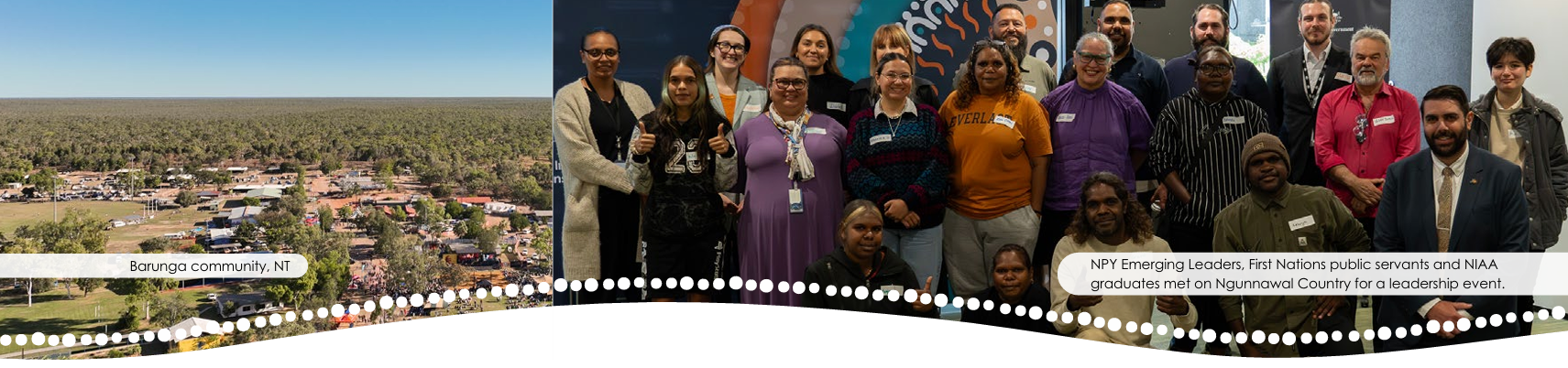
Strengthening NT remote Aboriginal investment service delivery and supporting communities to lead in their social and economic development
From 1 July 2025, Australian Government investment in remote Northern Territory communities has been supported by a landmark Partnership Agreement with the NT Government and Aboriginal and Torres Strait Islander partners, with investment priorities agreed through formal shared decision-making processes. This investment will support Aboriginal and Torres Strait Islander communities to lead in their social and economic development, in line with their aspirations, including the transition of services to community control over time. The investment will drive Closing the Gap Priority Reforms in the NT, enabling communities to establish formal partnership arrangements with services that cannot be transferred to community control.
Improving the impact of our programs and operations
The NIAA continues to transform the way we work in support of improving the impact of our programs and operations and delivering better outcomes under Closing the Gap. Focus continues on enhancing the efficiency and effectiveness of the Australian Government's investments, ensuring it can better support Aboriginal and Torres Strait Islander peoples to fulfil their needs, goals and aspirations. Our approach also aims to improve data transparency and enhance performance monitoring and evaluation, providing an evidence base to inform future investment decisions.
Key initiatives include:
» Strengthening change management capability and planning in program design to support readiness and engagement, as a critical enabler for the successful delivery of initiatives.
» Enhancing data-driven decision-making by integrating feedback loops, evaluation frameworks, and impact assessments into program design and delivery.
» Building workforce capability in policy design, program delivery, and change leadership to foster innovation and continuous improvement.
» Driving collaboration across internal and external stakeholders to ensure policies and programs remain responsive, effective, and measurable.
We work in partnership to support the self-determination and aspirations of Aboriginal and Torres Strait Islander people
Aligning our policies and programs with community aspirations
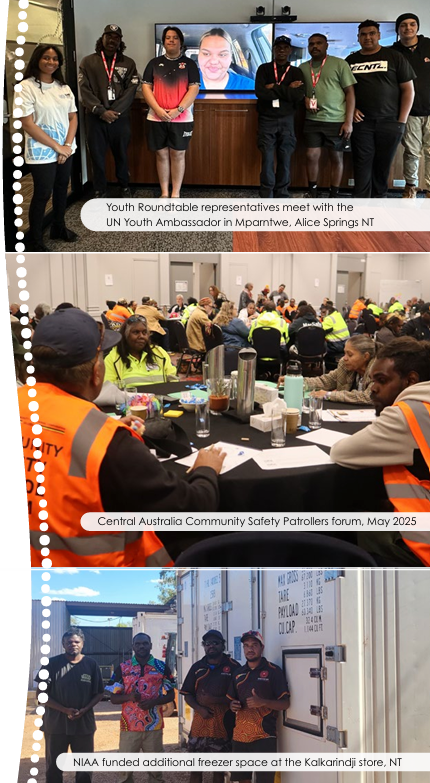
To deliver on our purpose and vision, it is critical that Aboriginal and Torres Strait Islander people have a say on the policies, programs and services affecting them, and we continue to ensure the direction of our work is informed by what communities are telling us they need.
Implementing the Central Australia Plan to improve social and economic outcomes in Central Australia
The Central Australia Plan (Plan) Taskforce has been extended until 30 June 2026 and will continue supporting place-based forums such as the Aboriginal Leadership Group and the Youth Roundtable. Through these groups, the NIAA bring together community leaders from the region to advise governments on key elements of the Plan. This includes measure design, implementation and monitoring of measures, to ensure that our programs and initiatives are aligned with community aspirations.
National Strategy for Food Security
The 2025 Closing the Gap Implementation Plan details the Australian Government's $71.4 million commitment to improving remote food security through a low-cost essentials subsidy scheme, dedicated remote store governance training and support package and an in-store Nutrition Workforce.
Access to low-cost essentials for remote stores subsidy scheme
The NIAA is working to reduce the cost of around 30 essential items in more than 76 stores in remote Aboriginal and Torres Strait Islander communities. The reduced prices are the result of a product subsidy scheme that will grow to cover up to 152 remote stores. The aim is to reduce the cost of items in remote stores to be comparable to supermarkets in urban areas, to help address cost-of living pressures and high rates of food insecurity experienced in remote Aboriginal and Torres Strait Islander communities. The subsidy scheme will be administered by Commonwealth company Outback Stores Pty Ltd to facilitate remote stores’ ability to purchase a range of essential products at a lower wholesale price, with freight costs also subsidised.
Support Aboriginal and Torres Strait Islander leaders, local governance and representative arrangements and Empowered Communities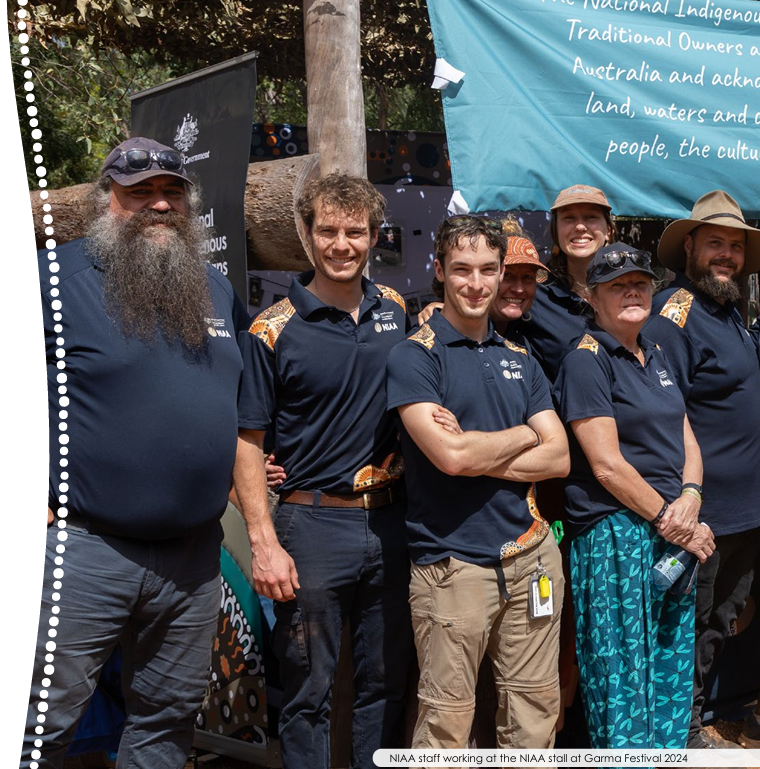
Place-based work within the NIAA encompasses a range of approaches, including place-based partnerships, community plans and place-based policies and programs. We are committed to investing in partnerships with a focus on community development and shared decision making, including through Empowered Communities (EC). In 2025–26, the NIAA will use the newly developed EC local partnership agreements across all 10 regions to guide our efforts in supporting community aspirations.
Building the capacity and capability of the NIAA regional workforce
The NIAA is building the capacity and capability of its regional workforce through strategic workforce planning and improved mobility arrangement to deepen our reach and impact. We aim to attract and retain staff capable of responding to identified community needs, building on the Employee Value Proposition. This will embed inclusion, and a culture of innovation through our regional workforce that will more effectively support improved outcomes for communities.
We deliver targeted programs through the Indigenous Advancement Strategy
The IAS is the way the Australian Government funds and delivers a range of programs for Aboriginal and Torres Strait Islander people. The NIAA administers the IAS and works to improve the way the Australian Government does business to ensure funding outcomes meet the needs and aspirations of Aboriginal and Torres Strait Islander people.
Boosting Aboriginal and Torres Strait Islander peoples employment
Strengthening mainstream services
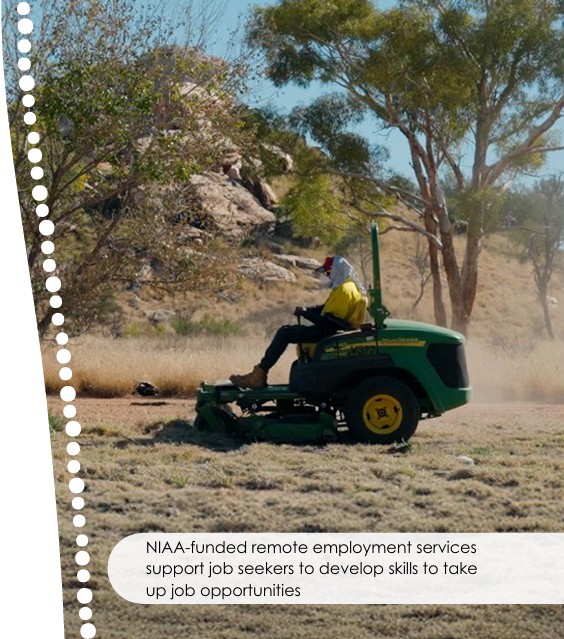
The NIAA will continue to work across the APS to ensure employment services reforms underway build pathways to jobs for Aboriginal and Torres Strait Islander peoples.
To do this, we are continuing to develop better data and evidence with other government agencies, informed by our consultations with Aboriginal and Torres Strait Islander peoples and the outcomes of our programs. We will continue to support Aboriginal and Torres Strait Islander people's voices to participate in policy and program design and implementation. As part of the Australian Government's commitment to improve employment outcomes in remote Australia, we continue to work on designing and implementing the RJED and the RAES program to replace the CDP. This reform aligns with, and complements, other employment supports in place, such as the Indigenous Skills and Employment Program (ISEP), Workforce Australia and Disability Employment Services.
Delivering the Remote Jobs and Economic Development program
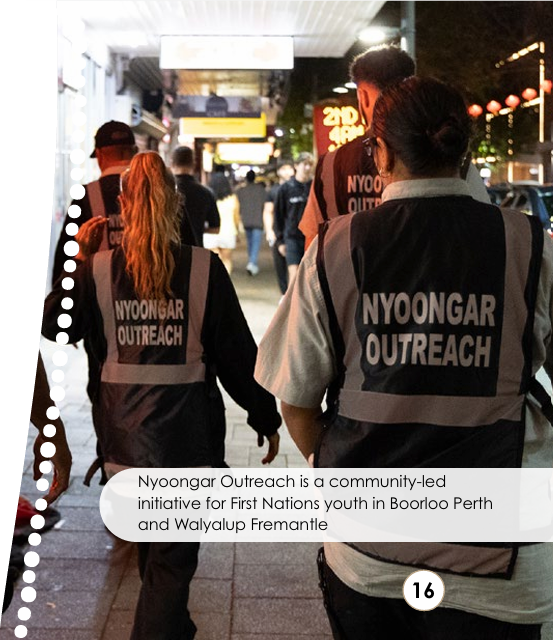
The first stage of the Australian Government’s reform to replace the CDP is the new RJED program. The Australian Government is investing $707 million to deliver the RJED program which began on 11 December 2024. It will fund 3000 new jobs that communities want, with good pay and conditions (like superannuation and leave). The 3000 new jobs are expected to come online over 3 years.
The RJED program has been informed through consultations with remote community members, Aboriginal and Torres Strait Islander people, job seekers, peak bodies, CDP providers, CDP participants, key stakeholders, relevant government agencies and overseen by the First Nations Reference Group. To test the design of the RJED program, NIAA engaged with more than 200 remote communities and 3,100 people between April and early July 2024.
To date, the NIAA has approved funding for 1,450 jobs through the first 2 RJED grant rounds with contract agreements underway with successful applicants. This includes at least 280 jobs that have transitioned from remote employment trials into RJED. These jobs were right across remote Australia in industries such as tourism, agriculture, health care, retail, administration, community services, maintenance and culture and the arts.
Designing the Remote Australia Employment Service
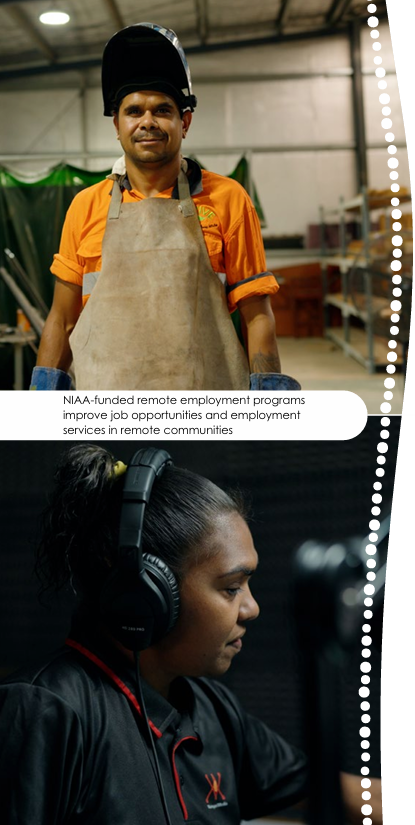 The second stage of the remote employment reform is the design and implementation of the RAES to directly replace the CDP from 1 November 2025. The Australian Government is investing $1.9 billion over 5 years to support around 40,000 job seekers who are currently looking for work, or may need help to become job ready, to get the skills and resources they need to take up job opportunities – including those created through the RJED program.
The draft Grant Opportunity Guidelines were published for information and consultation between 27 March and 21 April 2025, with feedback informing the final RAES Grant Opportunity Guidelines.
An open competitive grant round opened between 30 June and 28 July 2025 for interested organisations to apply for funding to deliver employment services in RAES regions (currently known as CDP regions).
The NIAA will work in collaboration with other government departments and agencies and current and new providers to ensure a smooth transition from the CDP to RAES.
RAES signals a pathway to align with broader reform in the employment services system, to support a coherent and consistent approach to employment servicing across remote and non-remote employment services programs.
NIAA will continue to work with the Department of Employment and Workplace Relations to minimise service gaps and support a smooth transition when the Time to Work Employment Service ends and when the Reconnection Education and Learning (REAL) program commences. The REAL program will be implemented in a phased approach across states and territories in the second half of 2025.
Delivery of Indigenous Skills and Employment Program
The NIAA will continue to strengthen employment and training outcomes for Aboriginal and Torres Strait Islander peoples through the delivery of the ISEP. ISEP aims to connect Aboriginal and Torres Strait Islander people to jobs, new job readiness activities and career advancement opportunities. The ISEP has 37 placed-based projects being delivered across Australia until 2028. ISEP projects have supported 4,375 First Nations participants into employment and training since the implementation of ISEP in 2024. Each ISEP project has been designed and delivered with Aboriginal and Torres Strait Islander communities and other key stakeholders.
These activities represent a shared commitment to ensuring the strong economic participation and development of Aboriginal and Torres Strait Islander people and communities, in line with the National Agreement on Closing the Gap.
Boosting housing
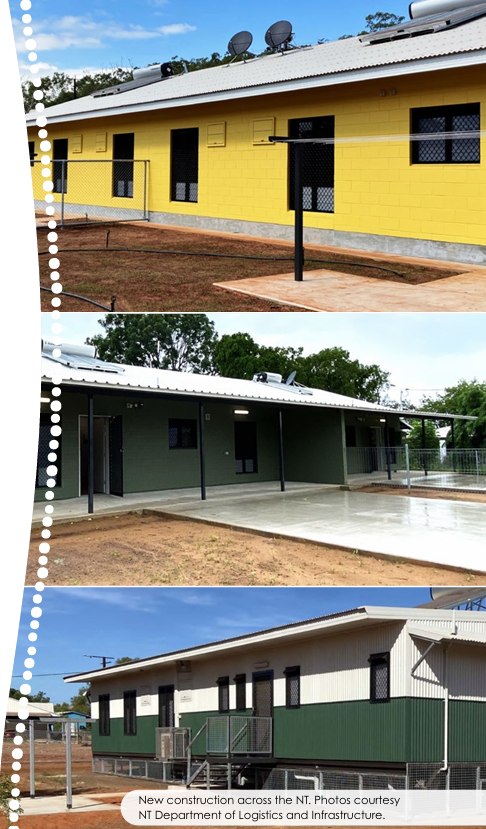 Access to suitable, appropriate and affordable housing is fundamental to improving the lives of Aboriginal and Torres Strait Islander people. The NIAA will continue to work across Commonwealth and state and territory governments to improve housing supply and conditions for Aboriginal and Torres Strait Islander people. The NIAA leads on a number of housing measures including:
» In the NT, where overcrowding is at its highest, the NIAA is continuing to work in partnership with the NT Government, NT Land Councils and Aboriginal Housing NT, the peak body for Aboriginal and Torres Strait Islander peoples housing in the NT, to deliver investment in remote housing in the NT. This includes implementing the
– $4 billion 10-year NT Remote Housing Federation Funding Agreement (FFA) 2024-34 that will see up to 2,700 houses built to halve overcrowding over the life of the FFA and delivery of cyclical repairs and maintenance program to ensure houses are appropriately maintained.
– $220 million for the Restoring Funding for NT Homelands FFA, that supports continued delivery of urgent repairs and upgrades to housing and essential infrastructure in NT Homelands.
» Working with Indigenous Business Australia (IBA) to increase opportunities for Aboriginal and Torres Strait Islander peoples to buy their own home and build intergenerational wealth.
» $70m boost to IBA’s Indigenous home ownership program, incorporating $20 million for the IBA Single Carers Home finance package to provide tailored home ownership support for single carer families.
Providing the first $100m to jurisdictions to provide urgent repairs and maintenance for housing in remote Aboriginal and Torres Strait Islander communities where it is needed most through the Housing Australia Future Fund.
Indigenous rangers program
The Indigenous rangers program (IRP) assists Aboriginal and Torres Strait Islander peoples in managing Country according to Traditional Owners’ objectives. Indigenous rangers use traditional knowledge and cultural practices, combined with western science, to manage land, river and sea country and deliver environmental, cultural, social and economic outcomes.
$636.4 million was committed in 2022–23 to expand the IRP to double the number of Indigenous rangers to 3,800 by the end of the decade and to work towards gender equity in ranger positions. Over 2,000 Indigenous Rangers are currently employed, and the percentage of women rangers by the end of 2024–25 increased from 33% to 42%. The funding will also provide support for a number of complementary measures to strengthen the sector, including the establishment of junior ranger groups and support the establishment of an Indigenous-led representative body.
The 3 priorities of the expansion are: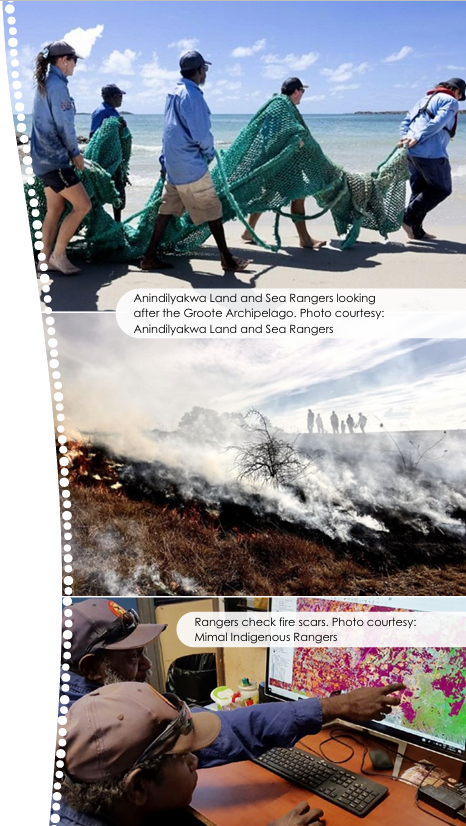
» Expanding the IRP footprint in places without Indigenous rangers
» Increasing the number of women Indigenous rangers (or women’s ranger groups)
» Increasing Indigenous rangers on Indigenous Protected Areas currently without IRP rangers.
The Australian Government has committed to a national expansion of the IRP through a grant opportunity and by developing an Indigenous Ranger Sector Strategy to guide the future growth and empowerment of Indigenous ranger organisations across Australia.
Ranger groups are formed to deliver on Country activities including:
» Engaging with community and Traditional Owners to plan land and water management activities
» Fire management - cultural burning and bushfire mitigation
» Biodiversity conservation - habitat and threatened species management, invasive species management, freshwater and sea Country management
» Strengthening Aboriginal and Torres Strait Islander peoples language and culture
» Cultural heritage protection and maintenance » Intergenerational knowledge transfer, education, training and capability development
» Biosecurity monitoring
» Partnerships with research, education, philanthropic and commercial organisations
» Building and retaining employment in the Indigenous Land and Water Management sector