We support the growth and sustainability of Aboriginal and Torres Strait Islander community-controlled organisations by investing in their capability, strengthening governance, and enabling them to lead service delivery that meets the needs of their communities. The commitments below reflect NIAA’s contribution to Priority Reform 2, aligned with the actions and change levers set out in the Priority Reforms Roadmap.
Deliverable
Investment Strategy to grow Indigenous sector strengths - Expansion of Indigenous Rangers Program.
Timeline in month/years
Rangers Expansions Grant Rounds 1 and 2 were undertaken in 2024 and 2025 respectively. Funding includes capacity building funding for groups. Current Indigenous Ranger Program funding agreements conclude on 30 June 2028.
Responsibility - NIAA Group/Branch
Country, Culture and Connection Group.
RAP Pillar
Opportunities.
Measure of Success
Success is demonstrated when the expanded Indigenous Rangers Program strengthens the capability and sustainability of Indigenous-led ranger organisations, supports secure and culturally meaningful employment — including increased participation of First Nations women — and enables Aboriginal and Torres Strait Islander peoples to manage Country in accordance with Traditional Owner priorities, while building long-term career pathways in land and water management.
Deliverable
Work with community-controlled organisations to create employment pathways through the Employment and Career Pathways Working Group of the First Nations Economic Partnership, co-chaired by the Coalition of Peaks and the NIAA.
Timeline in month/years
1st quarter 2026 – 4th quarter 2026 (subject to extension).
Responsibility - NIAA Group/Branch
Jobs & Economic Development.
RAP Pillar
Opportunities.
Measure of Success
Success is demonstrated when the Employment and Career Pathways Working Group of the First Nations Economic Partnership, co-chaired by the Coalition of Peaks and the NIAA, develops and advances policy recommendations that strengthen secure employment in the community-controlled sector, and progress is made toward establishing Economic Inclusion Zones that support sustainable, community led employment pathways.
Case Study
Strengthening Indigenous economic participation
Building opportunities through Indigenous procurement under Priority Reform 2
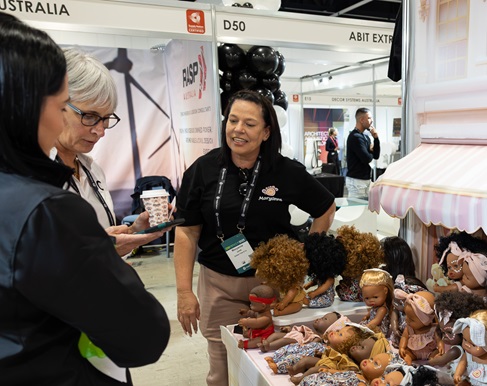
The NIAA is strengthening economic opportunity under Priority Reform 2 – Building the Community-Controlled Sector by embedding Indigenous business participation into Commonwealth systems and decision-making.
Economic participation is central to self-determination and long-term community strength.
The NIAA supports Aboriginal and Torres Strait Islander supplier diversity by implementing the Indigenous Procurement Policy (IPP) as part of its core business and stewardship role across government. Through its own procurement activity, and by supporting application of the IPP across Commonwealth portfolios, the NIAA is enabling Indigenous-owned businesses to access government supply chains and grow sustainable enterprises.
By embedding the IPP into procurement processes, the NIAA contributes to strengthening Indigenous entrepreneurship, business capability and economic independence. This approach supports community-controlled and Indigenous-owned businesses to build workforce capability, create jobs, and reinvest in local priorities, contributing to broader social and economic outcomes.

The NIAA’s role focuses on enabling systems that support opportunity at scale — providing guidance, oversight and coordination so that procurement settings are transparent, consistent and aligned with the intent of the policy. This strengthens accountability and ensures procurement outcomes contribute meaningfully to Aboriginal and Torres Strait Islander economic participation.
Through this work, the NIAA is embedding Priority Reform 2 into mainstream government practice. By using procurement as a lever for economic opportunity, the NIAA supports the growth and sustainability of Indigenous businesses, strengthens the community controlled sector, and advances reconciliation through equitable access to economic participation and self-determination.